
Category: Work & Leadership

  • (Don’t do) Playwashing

    (Don’t do) Playwashing

    [et_pb_section admin_label=”section”][et_pb_row admin_label=”row”][et_pb_column type=”4_4″][et_pb_text admin_label=”Text” background_layout=”light” text_orientation=”left” use_border_color=”off” border_color=”#ffffff” border_style=”solid”]

    Image credits: Alex Proimos via Wikimedia


    [/et_pb_text][et_pb_text admin_label=”Text” background_layout=”light” text_orientation=”left” use_border_color=”off” border_color=”#ffffff” border_style=”solid”]

    “It’s greenwashing when a company or organization spends more time and money claiming to be “green” through advertising and marketing than actually implementing business practices that minimize environmental impact. It’s whitewashing, but with a green brush” – Greenwashing Index 

    [/et_pb_text][et_pb_text admin_label=”Text” background_layout=”light” text_orientation=”left” use_border_color=”off” border_color=”#ffffff” border_style=”solid”]

    Inspired by the fairly well known concept “greenwashing”, I have coined a similar phrase that has proven useful to me:

    Playwashing

    So far, I have only used it casually in conversations, but building on the description of greenwashing above, I suggest the following working definition:’

    “Playwashing describes the situation where a company or organization spends more time and money claiming to be “playful” through advertising and marketing than actually implementing strategies and business practices that cultivate a playful culture in said organization”

    With this initial definition (which very much is up for debate), I consider it playwashing when a company conveys the image of allowing its employees to engage in work that share central characteristics with play without living up to this promise. You may be allowed to play a game at work, but this often happens in confined spaces and disconnected from the actual work. The popular foosball table is a good example of this, as it signifies play, but how often does the activity of playing this game have deeper ties to company culture?

    Like greenwashing, playwashing paints an inaccurate or downright false picture of the organization in question. This is a dishonest practice and hence a problem in itself. It is used in many forms of branding, including that which is directed at potential future employees – “employer branding”. Many people might want to work in a playful organization, but will likely be disappointed if this amounts to no more than a ping-pong table or video games to be played during breaks.
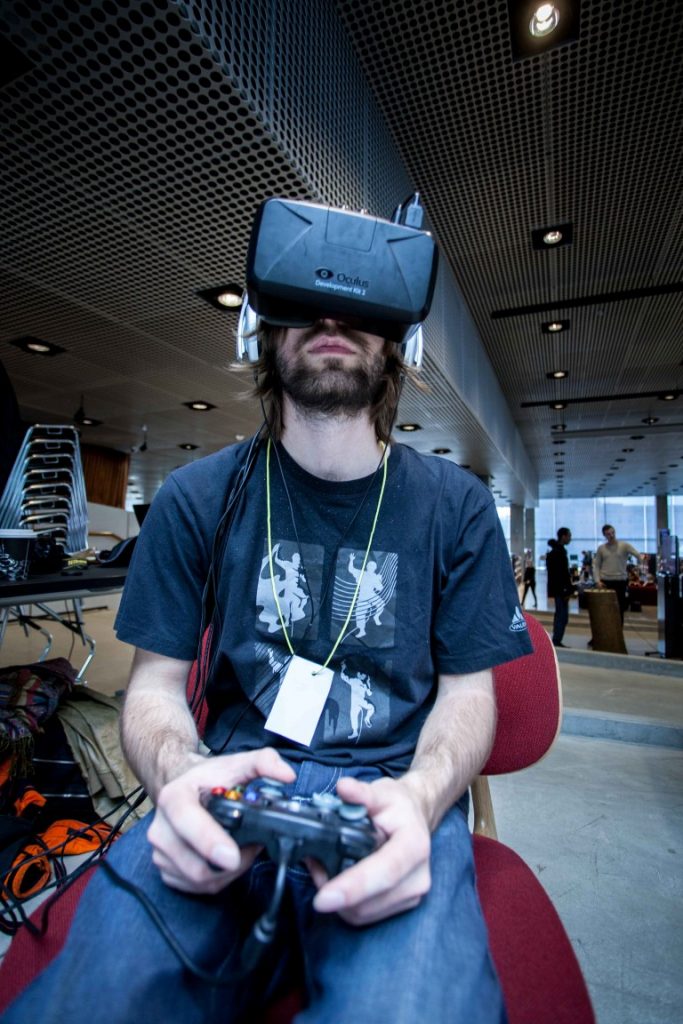
    img_1602-mediumIn the best case, these games provide people with a much needed break, whereas in the worst case it is used to disguise or sweeten what could perhaps most accurately be described as exploitation; Mere sugarcoating on an otherwise unacceptable proposal, a means of coercion to make people work harder and more. Yes, the games can be a first step in a more playful direction, and they can certainly be part of an ambitious playful strategy (I recall the notion of “the necessary hypocrisy” from organization studies: you say something that is not yet aligned with your actions, but you say it to guide you in that direction). If they exist in isolation, however, disconnected from management decisions, company culture and daily work practices, it is probably playwashing.

    Playwashing is not illegal, of course, but it doesn’t have much to do with the primary purpose of CounterPlay: to cultivate playful communities, and, in turn, contribute to a more playful world. I suspect that most forms of playwashing doesn’t do much to help us achieve that goal. It is common and tempting to hope for easy solutions to complex problems, and many seem to believe that games or technologies will work wonders if simply dropped into whichever context (be it work, education or life in general). In most situations, it won’t. It will only lead to disappointment and frustration if there is no willingness to address the underlying problems and pursue real transformation.

    Do you want to cultivate a playful culture in the workplace? Well, it can’t be sugarcoating (like ping-pong tables or other gimmicks), it needs to be embedded in the fabric, and it requires actual power and decision making to be put in the hands of those you expect to play along.

    As I have argued elsewhere, play is only real if it entails real participation and participation is only real if it entails a redistribution of power among the participants. Consequently, an organization is not playful if there is not a connection between the proclaimed presence of play in the organization and the distribution of power. In fact, the foosball table might be a more appropriate metaphor than I first imagined, since the players are all fixed in one place, without any real maneuverability or agency, they can only go round and round in circles, while controlled by someone else.

    Do the opportunities to play (if they are at all there) come with real agency and influence? Are employees frequently engaging in negotiations of rules and purpose of the work they’re doing? Is there a real sense of ownership and a shared responsibility?

    There are many other characteristics of play to look for, of course, that we can use to determine if playwashing is taking place in any given organization. Does a culture of fear permeate the organization? Do employees dare to experiment, take risks and suggest new solutions? Is there room for creativity and serendipity? Is silliness allowed?

    We experience a growing interest in play these years, which is mostly good, but I find reason to question how much of it is sincere and founded in a deeper understanding of and respect for play. Maybe the notion of “playwashing” can be a useful tool to examine the depth of engagement with play; is it real or only skin deep, a decoy, a simple tool to avoid asking the hard questions and making more complex changes?

    [/et_pb_text][/et_pb_column][/et_pb_row][/et_pb_section]
  • Fun, trust and playfulness at work – is that actually allowed?

    Fun, trust and playfulness at work – is that actually allowed?

    [et_pb_section admin_label=”section”][et_pb_row admin_label=”row”][et_pb_column type=”4_4″][et_pb_text admin_label=”Text” background_layout=”light” text_orientation=”left” use_border_color=”off” border_color=”#ffffff” border_style=”solid”]

    “What are you working on? Is it any fun?” I hadn’t been working that long at my current work place, when the CIO (Chief Innovation Officer) asked me that.

    And I replied: “I have fun working here, but I really don’t like the particular assignment I have now”.

    This short dialogue raised a lot of questions in my head, because it did not seem strange that my CIO asked me that question and at the same time I took it for granted that I could answer the way I did. But would I get that question and would I be able to answer in that way everywhere? Is it supposed to be FUN to work? If I had FUN would I be doing my work seriously enough? Would I be concentrated while having FUN? Would I be ambitious enough if I said “YES, I am having FUN!”?

    [/et_pb_text][et_pb_image admin_label=”Image” src=”http://www.counterplay.org/wp-content/uploads/2016/08/DSCF1727-Large.jpg” show_in_lightbox=”off” url_new_window=”off” use_overlay=”off” animation=”left” sticky=”off” align=”left” force_fullwidth=”off” always_center_on_mobile=”on” use_border_color=”off” border_color=”#ffffff” border_style=”solid”] [/et_pb_image][et_pb_text admin_label=”Text” background_layout=”light” text_orientation=”left” use_border_color=”off” border_color=”#ffffff” border_style=”solid”]

    Being where I was, being who I am and knowing my CIO the way I did, I knew for sure that I could answer: “Yes, I am having fun!” and “I hate my current work assignment!”. We also both knew that I was stuck with the assignment and I had to solve it the best way possible. I was not after being pitied or being taken off the assignment. This was just a statement of status quo. And for my CIO it was important that I had fun on an overall level – not necessarily with the specific assignment.

    Having fun at work is not the same thing as always having the fun assignments. In all workplaces there are boring, problematic, idiotic, difficult assignments and they have to be dealt with. But if the workplace signals that it is okay to have fun, to laugh, to connect with your colleagues it is actually more fun to do even the shitty assignments.

    But back to the questions I just rose. No, it would not be possible to have this small dialogue in every workplace. Actually I will argue that it is far too rare to find workplaces where this dialogue could take place and I see it as a valuable goal to make this type of dialogue possible in more workplaces. There is a number of reasons why that should be a goal and as I see it the most important reason is that it creates trust and hence more work joy.

    [/et_pb_text][et_pb_image admin_label=”Image” src=”http://www.counterplay.org/wp-content/uploads/2016/05/IMG_2518-Medium.jpg” show_in_lightbox=”off” url_new_window=”off” use_overlay=”off” animation=”left” sticky=”off” align=”left” force_fullwidth=”off” always_center_on_mobile=”on” use_border_color=”off” border_color=”#ffffff” border_style=”solid”] [/et_pb_image][et_pb_text admin_label=”Text” background_layout=”light” text_orientation=”left” use_border_color=”off” border_color=”#ffffff” border_style=”solid”]

    Trust is at the core of this small conversation, because my CIO trusts that I can do my work AND have fun at the same time. With his question he clearly states that having fun and working are not two opposites and by asking me my CIO makes sure to tell me that he is interested in my wellbeing and that it is important to have fun while working. He actually gives me a responsibility to make sure that I have fun in mind while being at work.

    Another thing that I want to connect to this dialogue and the themes “fun” and “trust” is playfulness. Playfulness is a phenomenon with a lot of facets. E.g. it is about being able to play in the organisation and have a playful approach to the workplace, the assignments and continuous organisational changes can make it more FUN to work and can create more trust between people. Playfulness in organisations is about trying, daring and giving space for people, new ideas, weird inputs. It is about taking on new roles and having a primarily yes-instead-of-no approach.

    Fun is one of the facets in playfulness and the ability to play. You simply have more fun if you are able to play and have a playful approach to your work and your life.

    [/et_pb_text][et_pb_image admin_label=”Image” src=”http://www.counterplay.org/wp-content/uploads/2016/08/IMG_1016-Medium.jpg” show_in_lightbox=”off” url_new_window=”off” use_overlay=”off” animation=”left” sticky=”off” align=”left” force_fullwidth=”off” always_center_on_mobile=”on” use_border_color=”off” border_color=”#ffffff” border_style=”solid”] [/et_pb_image][et_pb_text admin_label=”Text” background_layout=”light” text_orientation=”left” use_border_color=”off” border_color=”#ffffff” border_style=”solid”]

    A playful organisation is also tightly connected to the issue of trust. Playing and having a playful organisation create trust in the organisation, because people connect in ways they would not normally do in a professional situation and because it in an organisation where experimentation is profound is okay to try, retry and fail. To be able to play employees and management however need to have a fundamental feeling of trust and a basic understanding that it is okay to play. This means that you can’t create a playful organisation without a basic feeling of trust to start with.

    [/et_pb_text][et_pb_image admin_label=”Image” src=”http://www.counterplay.org/wp-content/uploads/2016/06/IMG_1510-Medium.jpg” show_in_lightbox=”off” url_new_window=”off” use_overlay=”off” animation=”left” sticky=”off” align=”left” force_fullwidth=”off” always_center_on_mobile=”on” use_border_color=”off” border_color=”#ffffff” border_style=”solid”] [/et_pb_image][et_pb_text admin_label=”Text” background_layout=”light” text_orientation=”left” use_border_color=”off” border_color=”#ffffff” border_style=”solid”]

    This means that becoming a playful organisation is not just to make some trendy “add on” to the organisation. In order to be and become a playfulness organisation playfulness needs to be taken seriously, it is a fundamental part of the organisation and has to do with atmosphere, relations and connections. Both management and employees need to be involved in creating a playful organisation – playing, trusting and having fun go both ways. The management needs to set the frame, give the space and trust the employees to perform, and the employees need to join in, take responsibility and open the mind for playing, having fun and trusting at work.

    When was the last time you considered if you have fun when you work or if there is enough trust at your workplace to play and have fun?

    The beautiful pictures are taken by Benjamin Pomerleau at CounterPlay Festival 2016.

    [/et_pb_text][/et_pb_column][/et_pb_row][/et_pb_section]

  • What is playful leadership?

    What is playful leadership?

    “if we want to make it safely and sanely through all the changes coming our way, we’re going to need to come out and play” – Bernie DeKoven

    Play is, perhaps more than anything, a fundamental source of fun, joy and well-being throughout our lives. It’s not reserved for children, and it’s not a luxury or something we do, when every other need is satisfied. On the contrary, it’s an “underlying, always there, continuum of experience” (Richard Schechner).

    Playful leadership then becomes a matter of cultivating playful mindsets and playful culture. As such, a playful leader is a leader, who not only accepts, but actively supports a playful culture.

    Why would you do that?

    Play opens up an organisation to the world, and it can’t be controlled. In play, we embrace the unpredictable. “When we adopt a playful attitude, we’re more open to a diverse, even divergent, set of possibilities” (Herminia Ibarra). We accept that the world is complex and chaotic, and we increase our ability to navigate this complexity. Quite often, play does not have a clear and pre-determined outcome, and if there is a goal, we usually don’t know how to get there. The playful leader may be the one proposing a vision and a direction for the organization, but it can never be set in stone. As an integral part of play, we engage in a constant movement, and an ongoing negotiation of rules, goals and meaning. Play challenges existing hierarchies and power structures, as everybody playing is part of this negotiation.

    When you’re a playful leader, you are able to instill a the people around you with the courage to experiment, and to take steps into the unknown, to break free from patterns and habits. In play, anything is possible. The entire world could be different. Your imagination is set free, your creativity runs wild, and your most crazy ideas may be the most meaningful ones. You take risks, and sometimes you end up in unexpected and perhaps even controversial territory. This creates a “friction” between us and the world, which generates questions. It’s a particular sort of “Verfremdungseffekt”, where we see the world “through the lens of play, to make it shake and laugh and crack because we play with it” (Miguel Sicart).

    In this process, we connect with each other in new ways, be it friends, colleagues or strangers. Play is an act of expression and communication. We can play with our relationships, roles and our identities, and we can develop our empathy by adopting new perspectives on the word, just as “playfulness may serve as a lubricant in productive work-relations” (Proyer & Ruch).

    …and these are just some of reasons, why I think we should do much more to explore and adopt more playful approaches to leadership.

    Would you care to share your thoughts in the comments?